
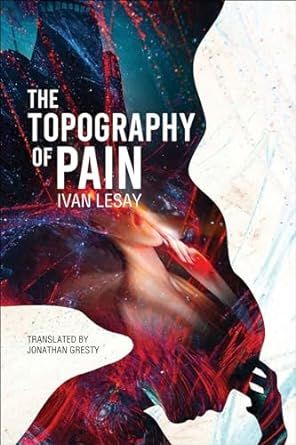
Today on my Blog we welcome Author Ivan Lesay. He wrote the book Topography of Pain which has been translated into English and published through Guernica Editions. Below is the blurb
Blurb
Three maps, one birthplace. Three epochs, one sorrow. A common thread of high ambitions, dashed hopes, and betrayed ideals runs through them all. Naďa’s failing health forces her to confront her moral principles. It is her body and she can use it the way she wants. Jaro, in the midst of the post-Communist transition, undergoes a profound life review as he loses all his illusions. Adam represents the culmination of these intertwined stories, emerging as the first man in an uncertain and fluid future world, easy-going, weary-falling.About Ivan
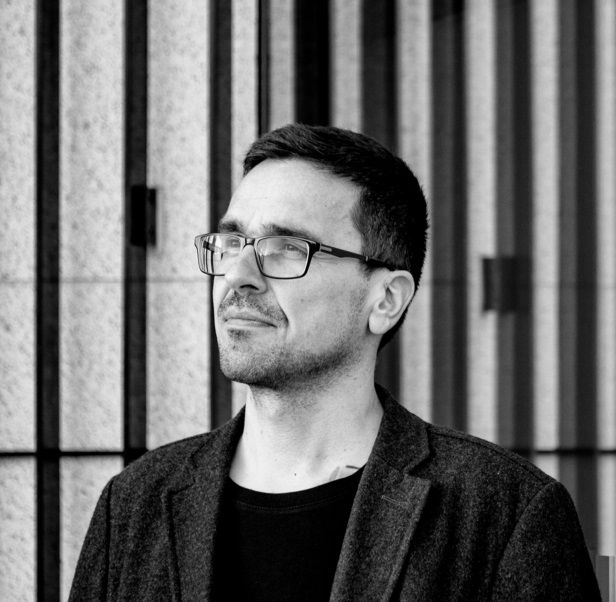
About Ivan Lesay
Lesay was born in Trnava on June 8, 1980. After finishing his secondary school studies at Ján Hollý Grammar School in Trnava, he read Political Science at the University of Trnava (2000–2005) and Political Economy at the Central European University in Budapest (2005–2006). He earned his Doctorate in Economics at the Slovak Academy of Sciences (2010). He has completed several study and research visits at universities across Europe, for example at the Umeå University in Sweden (2004) and at the Vienna University of Economics and Business (2009).
He gained teaching experience at the University of Trnava (2006–2007), the Faculty of Social and Economic sciences of Comenius University in Bratislava (2011) and the University of Vienna (2011–2012).
He was awarded the Slovak Presidential Prize for young scientists from the Slovak Academy of Sciences for 2011. In his academic work, he has focused mostly on development policy, the welfare state and the political economy of the 2008 Financial Crisis.
—
**Where do you generally write your novels? Do you have a dedicated writing space or do you just write wherever the mood strikes you?**
I mostly write at home, in the early hours of the morning. Sometimes, I also write on the train on my way to and from work. That’s for the actual writing on the computer. But I think about my stories practically everywhere, at all times. Whenever an idea strikes me, I try to jot it down and return to it later, when I have some peace and quiet.
—
**When you were writing *The Topography of Pain*, did you have a particular kind of reader in mind?**
I never really think about specific readers while I’m writing. Of course, when people enjoy my work and when those whose opinions I value like it too, it makes me happy. But while writing, I’m not thinking about anyone in particular. If I do think about something, it’s usually two things. First, me—I need to enjoy the process of writing. In other words, I want to write in a way that I would want other authors to write, the kind of writing I’d love to read. The second thing I think about is the standard of writing I aim to achieve. I know what I like, and what I consider quality literature, and I strive to get closer to that. It’s perhaps the same thing as the first point, just said in a different way.
—
**How much stock do you put in reviews? When *The Topography of Pain* was originally released in Europe, did you receive any reviews that caused you concern?**
I write for myself, but with the intent for others to read it. So, I do care about how my writing impacts readers. If they enjoy it and are entertained, that makes me happy. If they don’t like it, I don’t despair, but I think it’s a shame. The reception of *The Topography of Pain* was a pleasant surprise—it was better than I expected. I was especially happy with reviews from readers who’ve read a lot and have high standards, and they liked my book. I only encountered one really negative review, but luckily, most of the critical points didn’t bother me, though there were a few moments where I thought, “Maybe the critic has a point.” And I try to learn something from that.
—
**Are any of the characters in *The Topography of Pain* based on real-life people you have known? Some of the characters are quite dark—are any of them people you have known?**
The characters are a mix. They have bits of me, traits from real people I know or have heard of, sometimes they reflect characteristics from several people, and sometimes they’re entirely made up. But if you’re asking about the darker characters, well, those are all based on the real world. 😊
—
**Have you ever taken a real-life event that has happened to you and included it in your work somehow?**
Basically, I do that all the time. I don’t think imagination can exist in isolation from real life experience. So, every event in my book has somehow been lived by me. But if you’re asking about specific experiences I’ve implanted into the characters, then yes, there are some. For example, Naďa’s experiences in Munich. Or Jaro’s disappointments in losing his ideals during the post-communist transformation. Sometimes it’s not entire events, but descriptions of settings, sometimes just a tiny, picturesque detail.
—
**There’s an expression writers have about “characters that write themselves.” Has that happened in your writing when you come up with a really good or interesting character, and they start speaking to you directly?**
Absolutely! When I first heard this expression before I started writing, I thought—oh sure, what a cliché! But I experienced it myself while writing *The Topography of Pain*. Sometimes a character takes a completely different direction than I originally intended. I live with these characters, I communicate with them daily in my head, as if they were real. They’re like my imaginary friends with their own will and agency. I guess they’re a mix of my alter egos, maybe living out things that I don’t in real life… who knows? Perhaps that’s a task for psychologists. But as a writer, I enjoy it. I love my characters, even the dark ones, even if they have flaws. Maybe I love them more because they’re not perfect. Perfect characters are just annoying!
—
**The cover design for *The Topography of Pain* is very striking. What role did you, as the author, play in the creation of the cover?**
A very marginal role. I was lucky that my publisher, Guernica Editions, works with an amazing book designer, Allen Jomoc Jr. I’m not sure if he read the whole book or just the synopsis, but he sent me a few designs, one of which immediately caught my eye—it was already very close to the cover we have now. We exchanged a few emails and mostly just fine-tuned the details. I love the cover, and I think it’s a perfect representation of the book, not to mention visually captivating for readers.
—
I am very pleased to have had Ivan on my blog today and this is next up on my reading list
 Crazy Canadian Writing