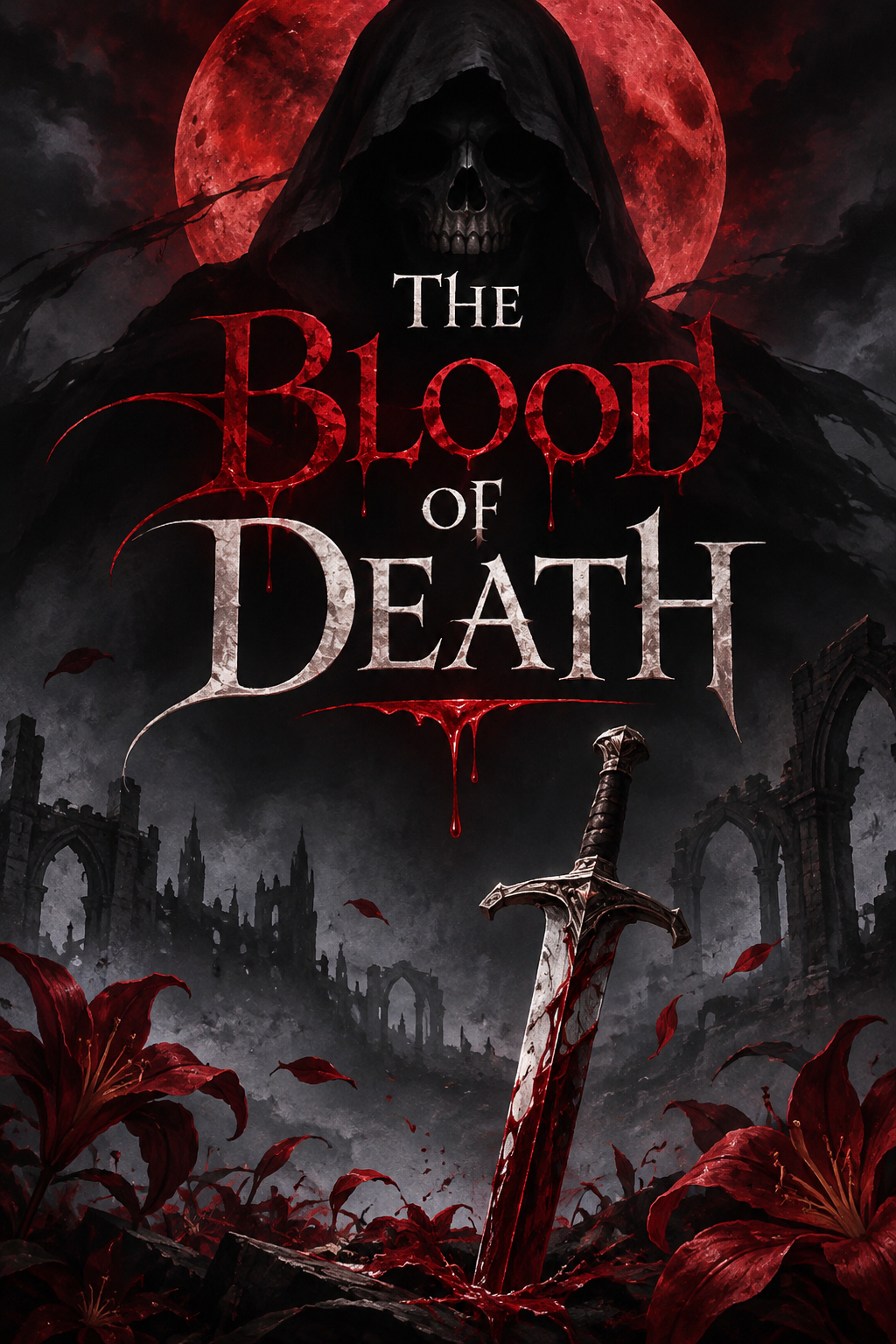
Some souls are lost. Others are deliberately erased.
——
The first time Daryl Mercer heard his father speak, the man had been dead for nearly three thousand years.
At least, that was what the voice told him.
Daryl had several questions about that statement.
Unfortunately, the voice didn’t seem particularly interested in answering them.
It was three seventeen in the morning, and Daryl was standing in the hallway of St. Catherine’s Hospital, staring at a door that shouldn’t have existed.
Again.
He was beginning to develop a serious dislike for doors.
Normal doors were fine. They opened into rooms, closets, occasionally bathrooms occupied by people who had forgotten to lock them. Those were the sorts of doors Daryl appreciated.
Doors that appeared between hospital rooms, shimmered with symbols nobody else could see, and occasionally whispered his name were becoming considerably less appealing.
Especially when they started speaking in languages he had never learned.
And even more especially when he understood them.
Blood remembers what the mind forgets.
The words came from somewhere beyond the black wooden door.
Daryl stared at it.
“That’s comforting,” he muttered. “Any chance you could explain what that means without sounding like the opening line of a horror movie?”
The door remained silent.
“Didn’t think so.”
He rubbed his eyes.
Three nights had passed since his last encounter with the impossible doorway. Three nights during which he had attempted to convince himself that the world hadn’t fundamentally changed.
He had failed spectacularly.
Margaret Whitmore had been the beginning.
The first dead woman who had spoken to him had apologized for dying.
Then there had been Thomas Bell, whose dead wife had warned him not to sleep.
Then the door.
And the things waiting beyond it.
Each encounter had revealed something new about the world.
Each had left Daryl with more questions than answers.
And now the dead were beginning to recognize him.
Not as a hospice worker.
Not as Daryl Mercer.
As something else.
Something he didn’t understand.
Something that frightened them.
A cold sensation spread across the back of his neck.
Daryl turned.
A man stood at the far end of the corridor.
He was tall, broad-shouldered, and dressed in an old-fashioned black suit. His silver hair was neatly combed, and his hands rested on the head of a wooden cane.
His eyes were entirely black.
Not dark brown.
Not the sort of black that might be mistaken for unusually large pupils.
Black.
As though someone had cut two holes into his face and forgotten to put anything behind them.
Daryl sighed.
“Of course.”
The man tilted his head.
“You can see me.”
“Apparently.”
“That should not be possible.”
“You’re telling me.”
The man began walking toward him.
His shoes made no sound against the polished hospital floor.
Daryl had learned enough over the past several days to recognize that as a particularly bad sign.
“Before we go any further,” Daryl said, “are you dead, dying, or something that’s going to make me regret asking?”
The stranger stopped.
For the first time, something resembling amusement crossed his face.
“You speak to death as though it were an inconvenience.”
“Depends on the death.”
“You have no fear?”
“Oh, I’ve got plenty. I’m just running low on patience.”
The man’s smile disappeared.
“Then perhaps you are his son after all.”
Daryl went still.
The words struck harder than they should have.
His father.
He knew almost nothing about the man.
His mother had spoken of him rarely, and when she did, her explanations had been vague enough to qualify as deliberate avoidance.
A stranger.
A brief relationship.
Someone who couldn’t stay.
Daryl had accepted those answers when he was younger.
He wasn’t certain he accepted them anymore.
“Whose son?”
The stranger looked toward the black door.
“The one who was never meant to have children.”
Something moved behind the wood.
Three slow knocks.
The stranger flinched.
Daryl noticed.
“You know what’s behind that door.”
“I know what it guards.”
“That’s not what I asked.”
“No,” the man said quietly. “It is not.”
He stepped closer.
The temperature dropped.
Frost spread across the edge of the nearest window.
“Listen carefully, Daryl Mercer. The boundary has begun to weaken. The dead are wandering where they should not. The forgotten are waking. And the blood inside you is answering a summons that has not been heard in centuries.”
Daryl folded his arms.
“That’s a lot to unpack before breakfast.”
“You must find your father.”
“Wonderful. Any chance he has a phone number?”
The stranger reached into his coat.
Daryl tensed.
But the man withdrew only a small silver coin.
Its surface was worn smooth except for a single symbol.
An inverted torch surrounded by a circle of thorns.
Daryl recognized the torch.
He didn’t know how.
He simply did.
The stranger placed the coin on a nearby windowsill.
“Ask him why he abandoned you.”
Then the man vanished.
No smoke.
No dramatic flash of light.
One moment he was there.
The next, he wasn’t.
Daryl stared at the empty hallway.
“Well,” he said eventually. “That was unnecessarily dramatic.”
Behind him, the door knocked again.
This time, something knocked back from inside his chest.
—
By seven in the morning, Daryl had decided that sleep was no longer a realistic part of his lifestyle.
He sat in the hospital cafeteria with a coffee that tasted like someone had described coffee to a machine and hoped for the best.
The silver coin rested beside his cup.
He had examined it repeatedly.
It was cold.
Not ordinary metal cold.
The sort of cold that seemed to reach through his skin and settle directly into his bones.
More disturbing was the fact that nobody else appeared able to see it.
A nurse had placed her tray directly over the coin without noticing.
A maintenance worker had wiped the table around it.
And when Daryl had attempted to hand it to another employee, the man had looked at his empty palm and asked whether he needed another coffee.
Daryl had considered that a reasonable question.
He turned the coin over.
On the reverse was an inscription.
The letters were unfamiliar.
Ancient.
Yet when he focused on them, their meaning unfolded inside his mind.
What death claims, blood may return.
Daryl read the words again.
“That’s not ominous at all.”
“Talking to yourself?”
He looked up.
Miriam Clarke stood beside the table, holding a paper cup and wearing the exhausted expression of someone who had spent twelve hours dealing with other people’s emergencies.
Miriam was one of the hospital’s senior nurses.
She had worked alongside Daryl for years.
She also possessed the deeply irritating ability to recognize when he was hiding something.
“Depends,” Daryl said. “Are you charging for the conversation?”
“Only if it’s interesting.”
“Then I’m safe.”
She sat across from him.
“You look terrible.”
“Always nice to be appreciated.”
“I’m serious.”
“So am I. This is my good face.”
Miriam studied him.
“You’ve been strange lately.”
“That’s a fairly broad accusation.”
“You keep staring at empty hallways. You disappear during your breaks. Yesterday, I watched you apologize to a chair.”
“There was someone sitting in it.”
“Nobody was sitting in it.”
“That’s where our opinions differ.”
Miriam set down her coffee.
“Daryl.”
Something in her voice made him stop smiling.
“What’s going on?”
He looked at the coin.
Then at Miriam.
He wanted to tell her.
More than he had realized.
For fifteen years, he had worked beside people who understood the ordinary tragedies of death. They understood grief, exhaustion, and the terrible helplessness of watching someone slip away.
But what did he say now?
That ghosts had begun speaking to him?
That impossible doors appeared in hospital corridors?
That a stranger with black eyes had suggested his father was some ancient supernatural being?
He could practically hear the conversation.
Good morning, Miriam. Apparently, my family tree has a branch in the underworld.
That would go well.
“I’m dealing with some personal things,” he said.
Miriam watched him for another moment.
Then she nodded.
“All right.”
He blinked.
“That’s it?”
“That’s it.”
“No interrogation?”
“Would it help?”
“Probably not.”
“Then when you’re ready, you’ll tell me.”
She stood.
At the cafeteria entrance, she paused.
“Oh, and Daryl?”
“Yeah?”
“Whatever’s happening, don’t convince yourself you have to handle it alone.”
She walked away.
Daryl stared after her.
For reasons he couldn’t explain, those words frightened him more than the stranger had.
Because somewhere deep inside him, something whispered that anyone who stood too close would eventually pay for it.
—
The first patient died at eleven forty-two.
Her name was Eleanor Price.
She was eighty-six years old, had advanced lung disease, and had spent the final weeks of her life arguing with anyone who suggested she should stop eating chocolate.
Daryl liked her immensely.
She had called him a handsome young man during their first meeting.
Then she’d put on her glasses and revised her assessment.
He had liked her even more after that.
When her breathing became shallow, Daryl sat beside her bed.
Her daughter held one hand.
Daryl held the other.
There were no supernatural warnings.
No whispering shadows.
No impossible doors.
Just a woman reaching the end of a long life.
And the people who loved her trying to make that journey less frightening.
“Am I going to see my husband?” Eleanor whispered.
Daryl hesitated.
He had spent years answering variations of that question.
He had always been careful.
Always honest.
He never promised things he couldn’t know.
But now?
Now he had seen the dead.
He had spoken to them.
He knew there was something beyond the final breath.
What he didn’t know was whether that something was kind.
“I don’t know exactly what happens next,” he said gently. “But I don’t think you’ll be alone.”
Eleanor smiled.
“Good.”
Her eyes closed.
A minute later, she died.
Daryl remained beside her while her daughter wept.
He gave the family time.
He offered the small comforts that had become second nature over fifteen years.
And when the daughter finally stepped outside to call her brother, Daryl looked toward the bed.
Eleanor was standing beside it.
She appeared younger.
Perhaps fifty.
Her silver hair had become dark brown, and the deep lines around her eyes had softened.
She looked down at her body.
Then at Daryl.
“Well,” she said. “That’s a rather unpleasant way to spend a Thursday.”
Daryl almost smiled.
“You handled it better than most.”
She examined him.
Her expression changed.
“Oh.”
Daryl felt his stomach tighten.
He had come to hate that particular reaction.
“What?”
Eleanor took a step backward.
“You’re one of them.”
“One of who?”
She stared at his face.
“No. Not one of them.”
Her voice trembled.
“His.”
The lights flickered.
Daryl stood.
“Eleanor, who are you talking about?”
She shook her head.
“He isn’t supposed to have children.”
The words were identical to the stranger’s.
Daryl moved closer.
“Who?”
Eleanor looked toward the ceiling.
Her face filled with terror.
“He’s coming.”
The room darkened.
Not gradually.
The sunlight simply disappeared.
The monitors went black.
The air became heavy.
And for one impossible moment, Daryl felt the entire hospital holding its breath.
A figure appeared at the foot of Eleanor’s bed.
Tall.
Motionless.
Wrapped in a dark cloak that seemed woven from the space between stars.
Its face was hidden.
In one hand, it carried a black staff.
The other was empty.
Eleanor fell to her knees.
Daryl stepped between them.
“Who are you?”
The figure remained silent.
Daryl felt a pressure against his chest.
The silver coin, tucked into his pocket, had begun to burn.
He reached for it.
The figure lifted its head.
Two pale lights appeared beneath the hood.
And Daryl heard a voice that seemed to come from everywhere.
“Move aside, child.”
Daryl swallowed.
“Not until you tell me what you want.”
“The soul.”
“She has a name.”
The figure paused.
Something shifted beneath its hood.
“Names are for the living.”
“Then you haven’t been paying attention.”
The air trembled.
Eleanor began to fade.
Daryl felt something pulling at her.
Not a hand.
Not a physical force.
Something deeper.
A command written into the world itself.
She cried out.
Daryl reached for her.
His fingers closed around her wrist.
And the world stopped.
—
There was no hospital.
No bed.
No Eleanor.
Daryl stood in a vast black expanse beneath a sky filled with motionless stars.
A river stretched before him.
Its waters were dark silver.
Countless figures waited along the opposite shore.
Some were human.
Others were shapes he couldn’t identify.
All watched him.
Behind Daryl stood a gate made of white stone.
Its surface was covered in names.
Millions of them.
Perhaps billions.
Every name glowed faintly.
Except one.
At the very centre of the gate, a name had been carved so deeply that the stone around it had cracked.
DARYL MERCER.
He stared.
“Well, that’s unsettling.”
“More than you know.”
The voice came from behind him.
Daryl turned.
A man stood beside the river.
He appeared to be in his early fifties, with dark hair threaded with silver and a face that seemed both ordinary and impossibly ancient.
He wore a simple black coat.
No crown.
No armour.
No dramatic supernatural costume.
Just a man.
But the stars above him had begun to dim.
And the river had stopped moving.
Daryl knew him.
Not his face.
Not his name.
Something deeper recognized him.
The blood inside his veins seemed to pull toward the stranger.
“Who are you?” Daryl whispered.
The man looked at him with an expression Daryl couldn’t understand.
Regret.
Wonder.
And something dangerously close to grief.
“You have your mother’s eyes.”
Daryl’s breath caught.
“No.”
The man lowered his gaze.
“I wondered whether you would recognize me.”
“No.”
“Daryl—”
“Don’t.”
The word echoed across the river.
The stranger fell silent.
Daryl took a step backward.
For most of his life, he had imagined meeting his father.
He had imagined anger.
Questions.
Maybe even forgiveness.
He had never imagined meeting him in a place where the stars stood still and the dead gathered on the opposite shore.
“You’re my father?”
“Yes.”
Daryl laughed once.
It was a sharp, humourless sound.
“Of course you are.”
The man didn’t move.
“Do you know who I am?”
Daryl looked toward the river.
Then the gate.
Then the endless procession of waiting souls.
He thought about Margaret.
Thomas.
The impossible door.
The black-eyed stranger.
The coin.
And the way the dead had begun to fear him.
“I have a fairly unpleasant suspicion.”
The man nodded.
“My name is Thanatos.”
The river shuddered.
The stars flickered.
And every soul on the opposite shore bowed its head.
Daryl stared at him.
Thanatos.
The ancient Greek personification of death.
The being whose name had haunted the stories of gods and mortals for thousands of years.
His father.
Daryl looked at the man for a long moment.
Then he said the only thing his exhausted mind could produce.
“Well, that explains why Christmas was always awkward.”
For the first time, Thanatos smiled.
It was a small expression.
Almost human.
And somehow, that made everything worse.
—
“You’re taking this remarkably well,” Thanatos said.
Daryl stared at him.
“I’m considering screaming.”
“That would be understandable.”
“I’m also considering punching you.”
“That would be less advisable.”
“Good to know.”
They stood beside the motionless river.
Daryl had questions.
Hundreds of them.
Why had his father abandoned him?
Why had his mother hidden the truth?
Why could he see the dead?
Why had the door appeared?
And why, after nearly fifty years, had his father finally decided to introduce himself?
But one question pushed ahead of all the others.
“Why now?”
Thanatos looked toward the far shore.
“Because you have awakened.”
Daryl frowned.
“That’s your explanation?”
“It is the beginning of one.”
“Try using more words.”
Thanatos turned toward him.
“Children of gods are rare. Children of death are almost impossible.”
“Almost?”
“You are the first to survive.”
Daryl felt the words settle into him.
“The first?”
“Others were conceived. None lived long enough to draw their first breath.”
Daryl looked away.
He wasn’t sure what to feel.
Horror.
Pity.
Anger.
All three seemed reasonable.
“Why?”
“Because death cannot create life without breaking the balance.”
“Yet here I am.”
“Yes.”
“Seems like someone made a mistake.”
Thanatos’s expression hardened.
“No.”
The single word carried such force that the river trembled.
“You were not a mistake.”
Daryl looked back at him.
For one brief moment, he saw something beneath the ancient god’s composure.
Pain.
Real pain.
And suddenly, Daryl wondered whether his father had spent decades believing he would never see his son again.
The thought did nothing to soften his anger.
But it complicated it.
“Then why did you leave?”
Thanatos said nothing.
Daryl waited.
He had spent fifteen years sitting with people who were afraid to speak.
He knew how to use silence.
Finally, Thanatos answered.
“Because if I had stayed, they would have killed you.”
The stars dimmed.
Daryl felt cold spread through his chest.
“Who?”
“The gods who maintain the boundary.”
“Why would they care about me?”
“Because you possess something no mortal was ever meant to carry.”
Daryl looked down at his hands.
“They look fairly ordinary.”
“Your hands are not the danger.”
“That’s reassuring.”
Thanatos stepped closer.
“Every living creature moves toward death. Every soul that crosses the boundary must eventually surrender to its laws.”
Daryl nodded slowly.
“All right.”
“But you exist between those laws.”
“What does that mean?”
“It means you may touch the dead without joining them. You may hear those who have passed beyond mortal perception. And, in time, you may command the passages between worlds.”
Daryl thought about the door.
The silver coin.
Eleanor’s wrist beneath his fingers.
“And that’s all?”
Thanatos looked away.
“No.”
Daryl’s stomach tightened.
“Of course not.”
“There is one final gift.”
The god’s voice grew quieter.
“A gift I prayed you would never discover.”
Daryl stared at him.
“What gift?”
Thanatos raised one hand.
The river began to move.
A thousand voices whispered from the opposite shore.
Daryl heard crying.
Laughter.
Prayers.
Names.
And beneath them all, a heartbeat.
His heartbeat.
Thanatos spoke.
“Death is not always permanent for you.”
Daryl stopped breathing.
“What?”
“You can return a soul to the living.”
The words seemed to hang in the air.
Daryl shook his head.
“No.”
“It is possible.”
“People don’t just come back from the dead.”
“Not for mortals.”
Daryl thought of the patients he had lost.
The families he had comforted.
The hands he had held while the final breath left a body.
Fifteen years of grief.
Fifteen years of helplessness.
And now his father was telling him that some of those deaths might not have been final.
The idea was unbearable.
“Then why didn’t you tell me sooner?”
“Because every resurrection demands payment.”
Daryl looked at him.
“What kind of payment?”
Thanatos’s expression became terribly sad.
“The balance cannot be cheated, Daryl.”
The river darkened.
“Every soul you return must be replaced.”
Daryl felt his blood turn cold.
“Replaced with what?”
Thanatos met his eyes.
“Another soul.”
Silence spread between them.
Daryl stepped backward.
“No.”
“You must understand—”
“No.”
“The power exists whether you accept it or not.”
“Then I won’t use it.”
Thanatos watched him.
“I hope you never have to.”
The world trembled.
A distant scream echoed across the river.
Thanato

